Specialty treatment continuity
From Patient Engagementto Verified Treatment Continuity.
See Risk Earlier. Verify Action. Protect Continuity.
One continuity journey
Illustrative- 01Treatment signalPotential delay identifiedPriority
- 02PSP interventionAssigned nurse · follow-up trackedRecorded
- 03Programme outcomeNext treatment statusPending

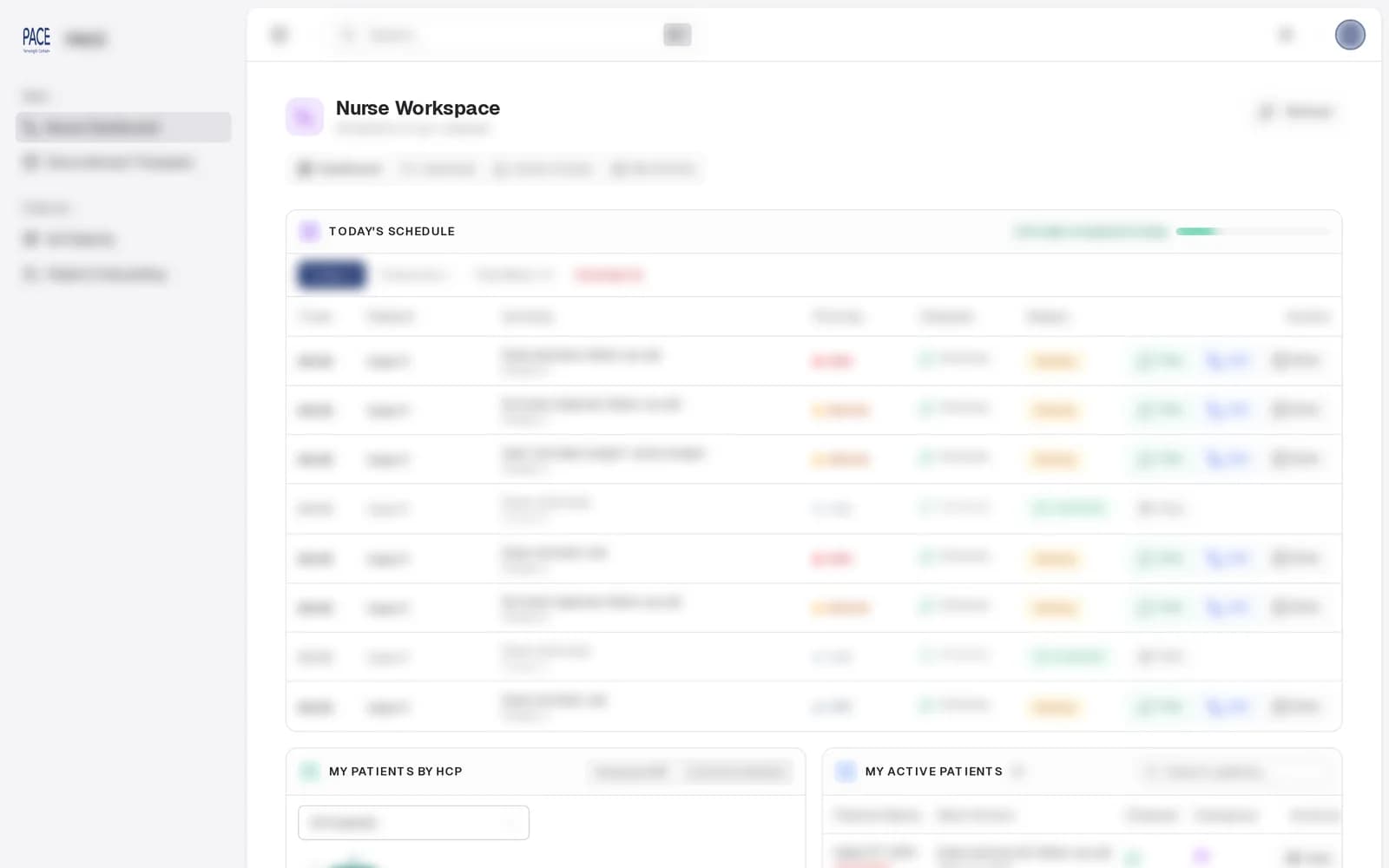
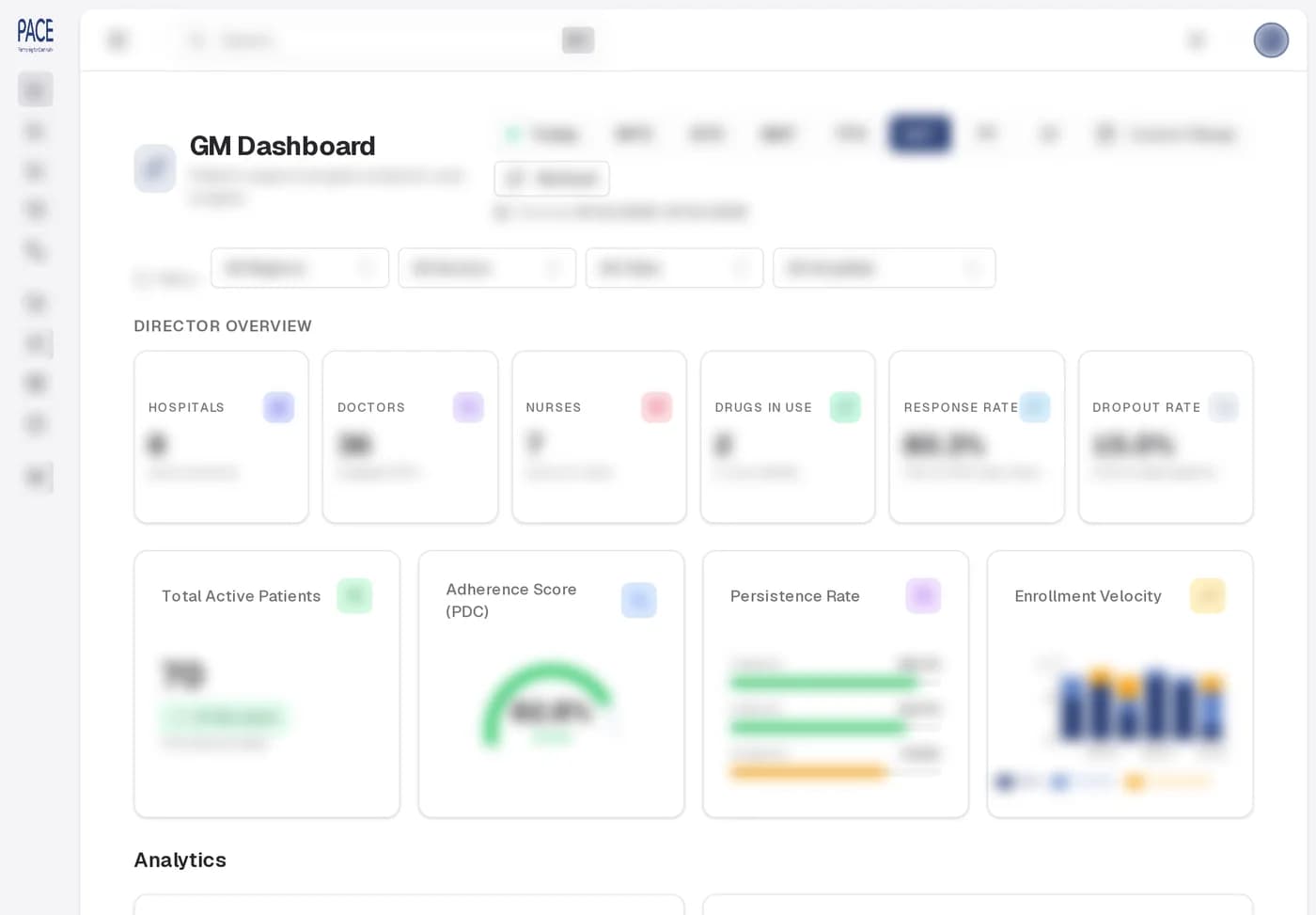
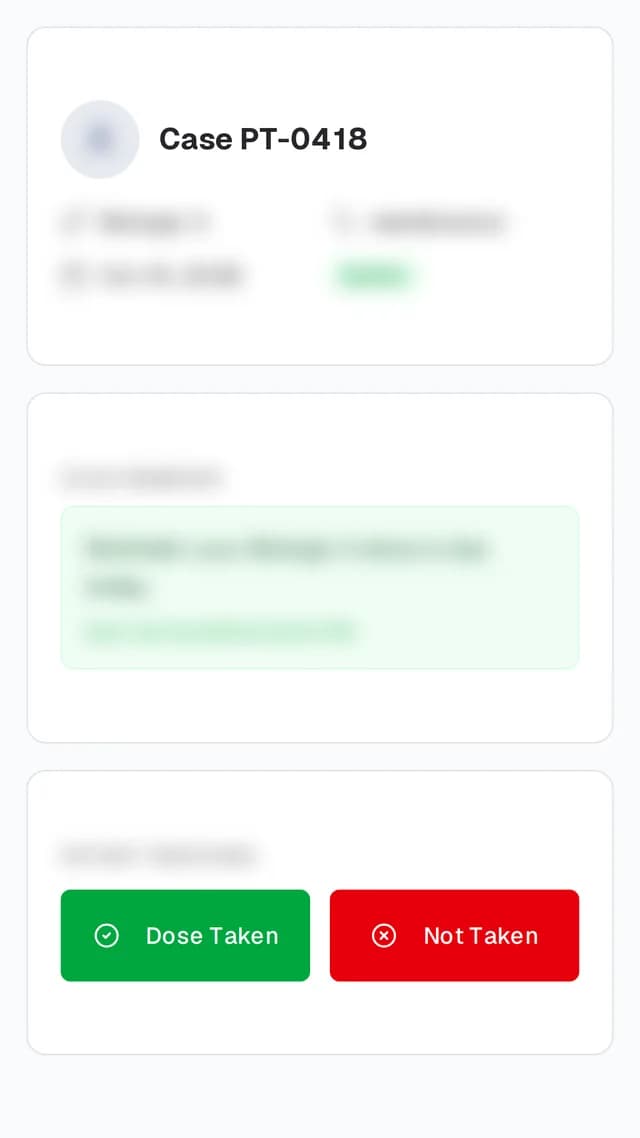
Patient companion
PSP nurse operations
Pharma programme governance
Automated patient engagement, connected PSP operations and independent pharmaceutical governance, built around treatment continuity.
The PSP operates the programme. PACE makes risk, action and programme performance independently visible and governable.
Saudi-founded. Built to advance patient continuity and support across biologics and long-term specialty injectable therapies in Saudi Arabia.
Designed to work alongside existing PSP operations.
Patient and HCP identities protected in pharma views.
The reporting gap is a decision gap.
Persistence risk can develop before a patient reports a problem. PSP actions can sit across separate tools. Programme history can fragment when vendors or reporting formats change. PACE brings the signals together so teams can see what needs attention, what happened next and whether continuity was protected.
Persistence risk appears too late
Delayed, missed or extended treatment patterns may emerge before discontinuation is visible.
PSP execution is difficult to verify
Activity counts do not always show whether the barrier was resolved or what happened next.
Programme intelligence fragments
Different brands, vendors and reporting cycles make comparison and continuity harder.
The value of earlier action
PACE connects enrolment, treatment-rhythm signals, persistence risk, PSP intervention and programme outcomes so teams can act earlier, verify what happened and protect treatment continuity.
PACE value loop
- Live programme visibility
- Identify continuity risks
- Prioritise & escalate
- Track PSP interventions
- Verify resolution
- Monitor treatment continuity
- Measure programme effectiveness
Protect therapy value
See risk earlier. Verify action. Measure effectiveness. Protect continuity.
What if you saw dropout risk sooner?
Estimate the revenue that could be preserved if earlier PACE-enabled follow-up helped prevent a share of treatment dropouts.
- Patients in your programme
- 200
- Annual dropout rate
- 30%
- Annual net revenue per patient
- SAR 150,000
- Dropouts earlier action might prevent
- 20%
Potential revenue preserved
SAR 900,000
12 patients continuing treatment for 6 additional months.
Illustrative example. Scenario estimate before PACE fees and delivery costs. Not guaranteed savings or profit.
Estimate potential revenue preservedFour role-specific decision views.
Govern the programme, not just the report.
Identify emerging persistence risk, prioritise PSP action, verify follow-through and preserve continuity across providers.
Explore programme governance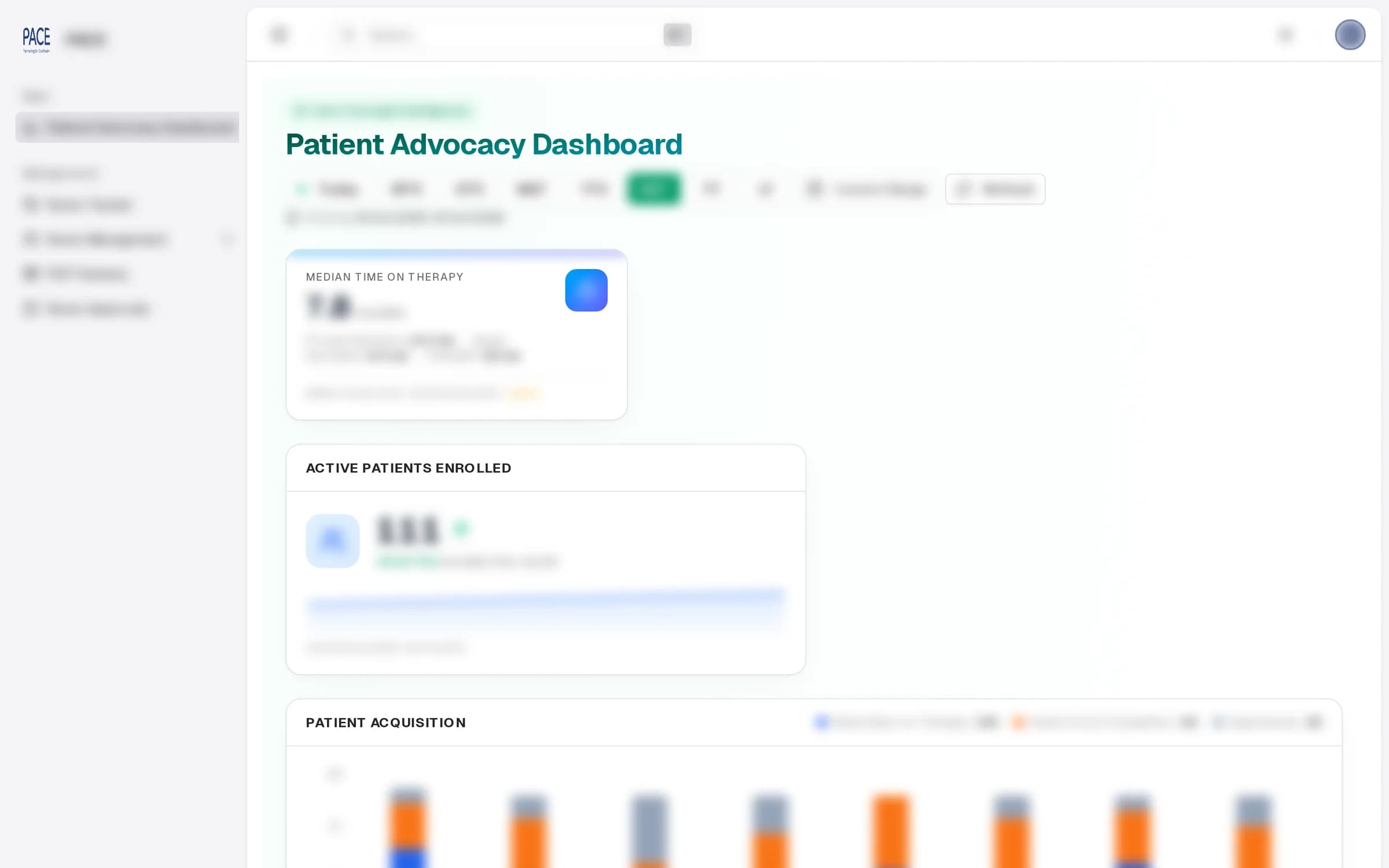
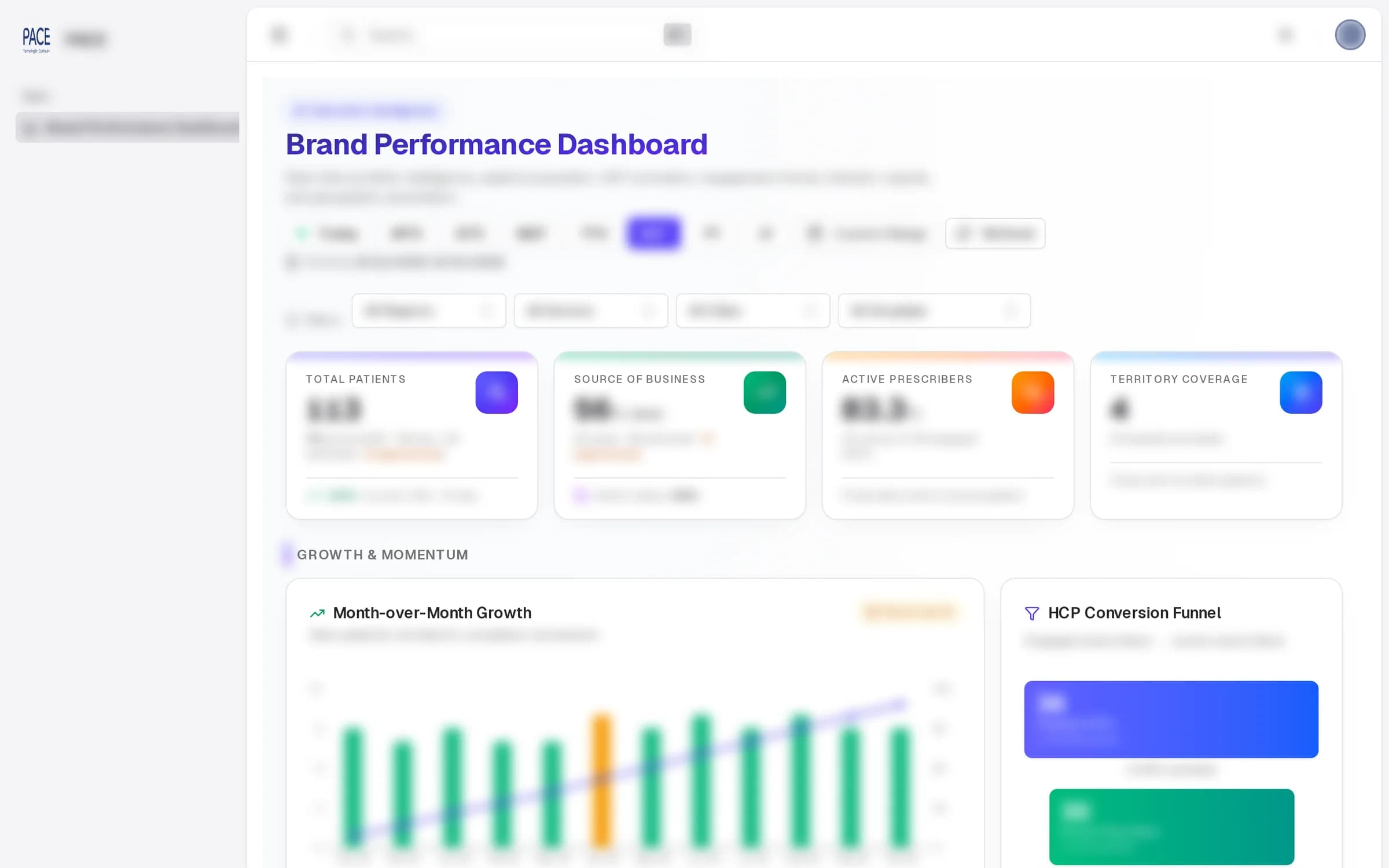
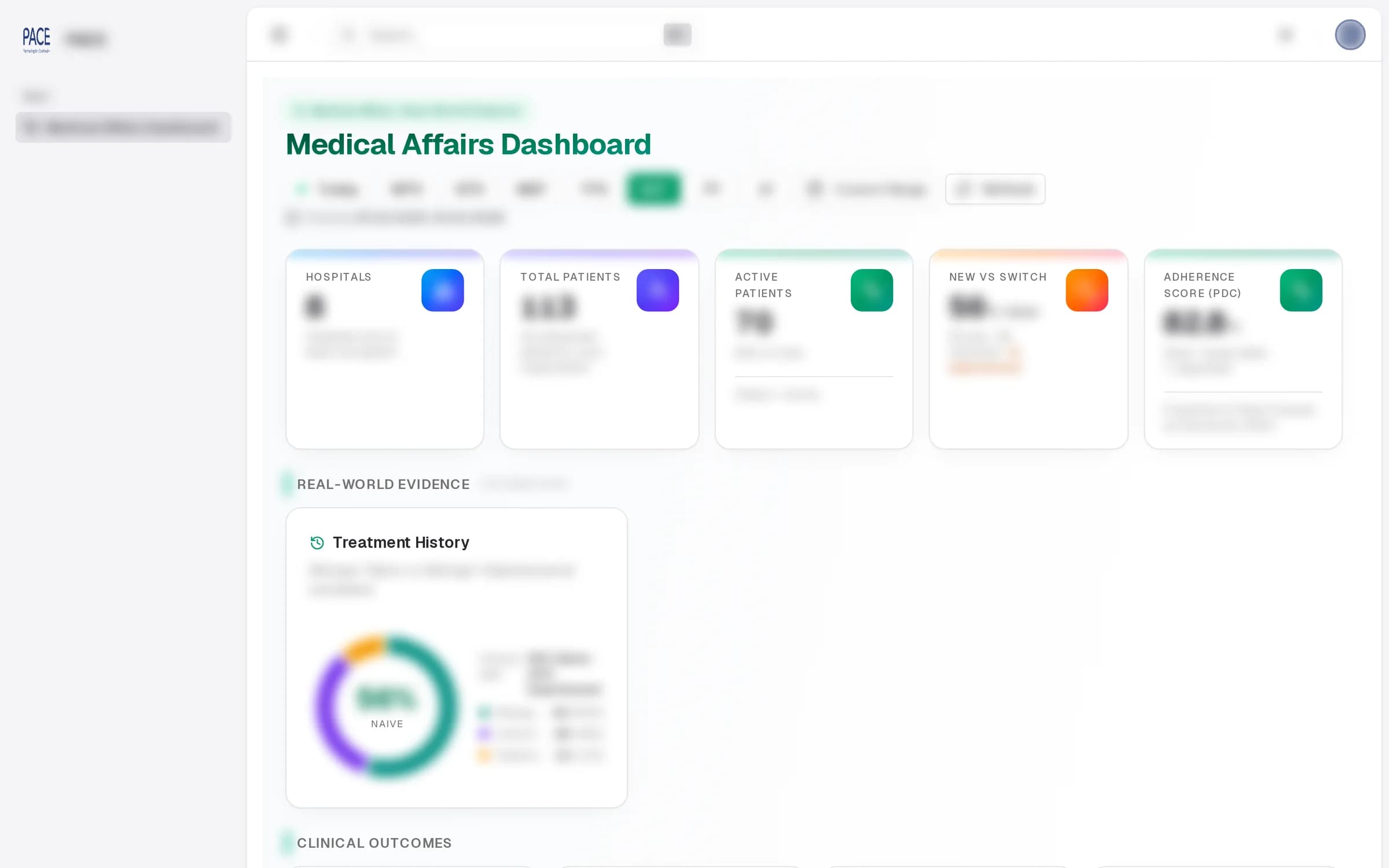
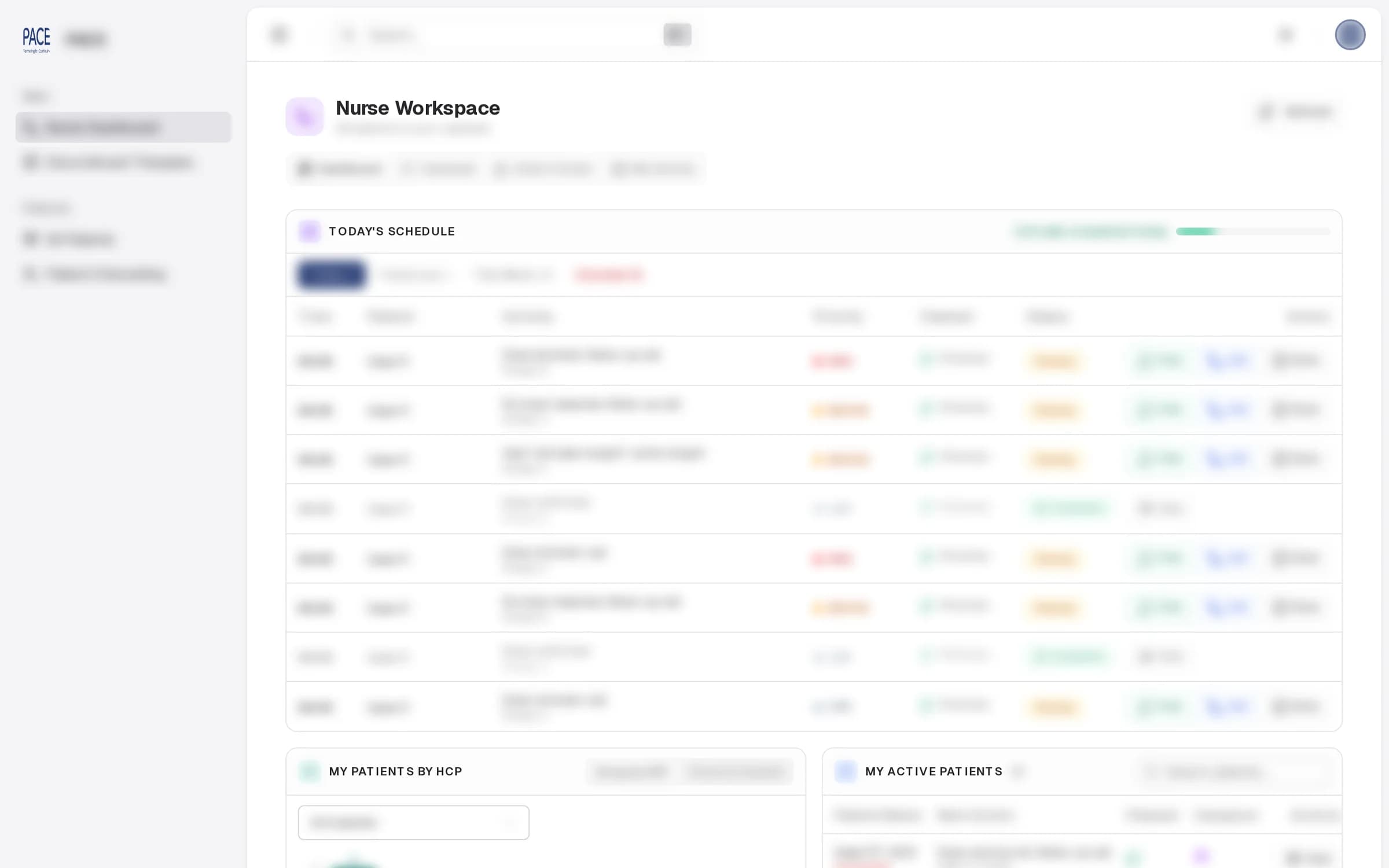
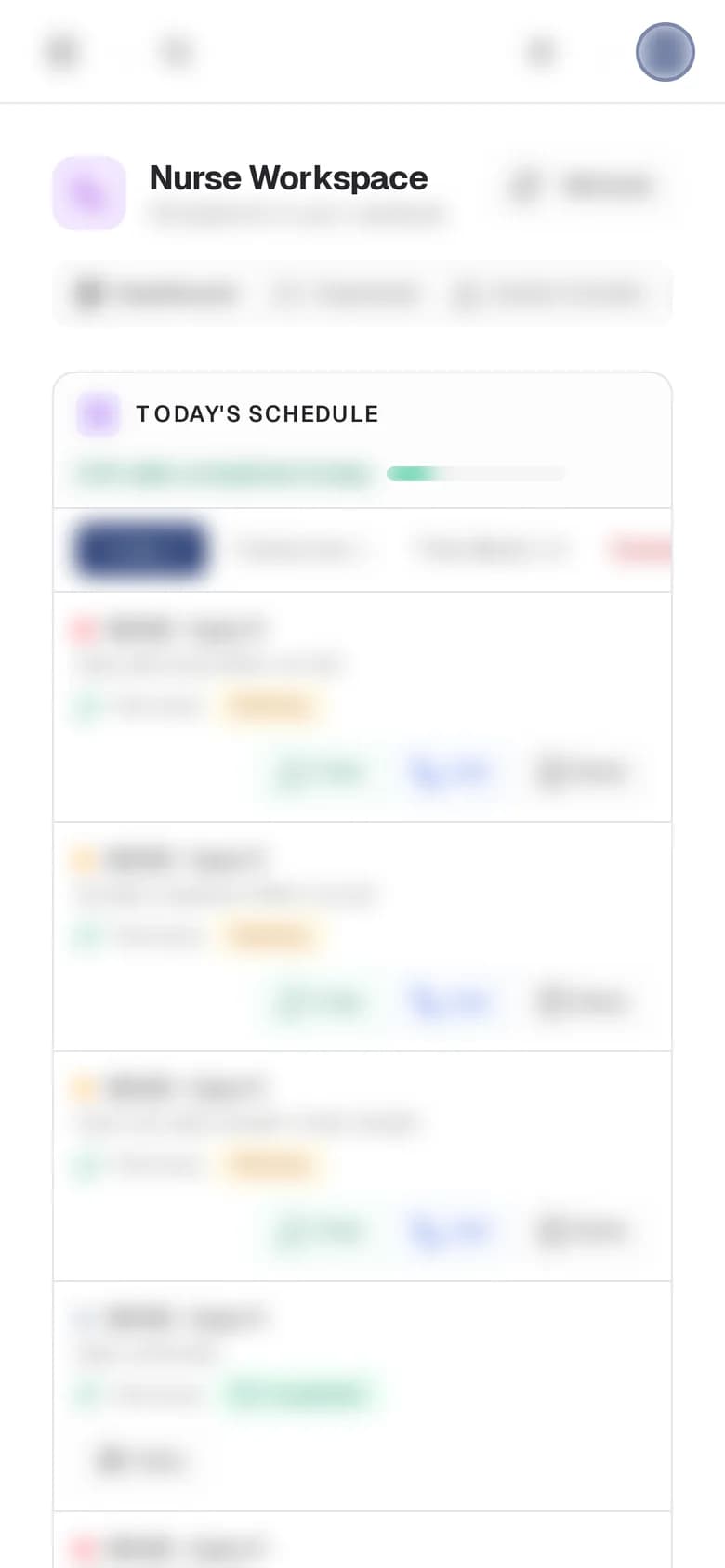
From programme signals to informed decisions
Identify persistence risk early
Detect delayed, missed or extended treatment patterns before avoidable discontinuation. Give authorised PSP teams earlier signals to prioritise follow-up.
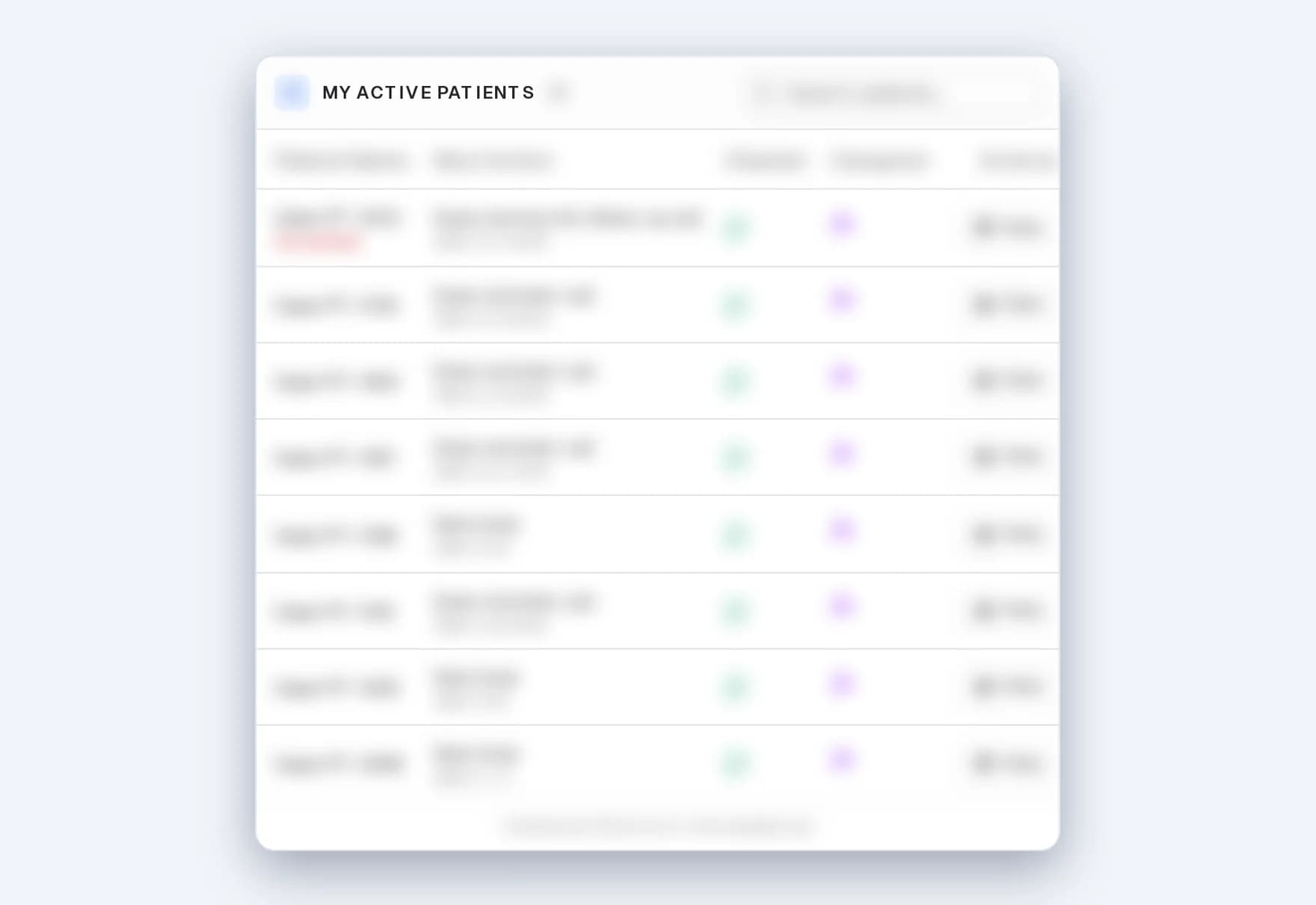
Illustrative dashboard Verify action and resolution
Connect reported needs with recorded interventions, response progress, documented resolution and subsequent treatment status.

Illustrative dashboard Understand programme performance
Track enrolment, patient mix, persistence, treatment-rhythm patterns and programme outcomes using consistent measures across brands and PSP providers.
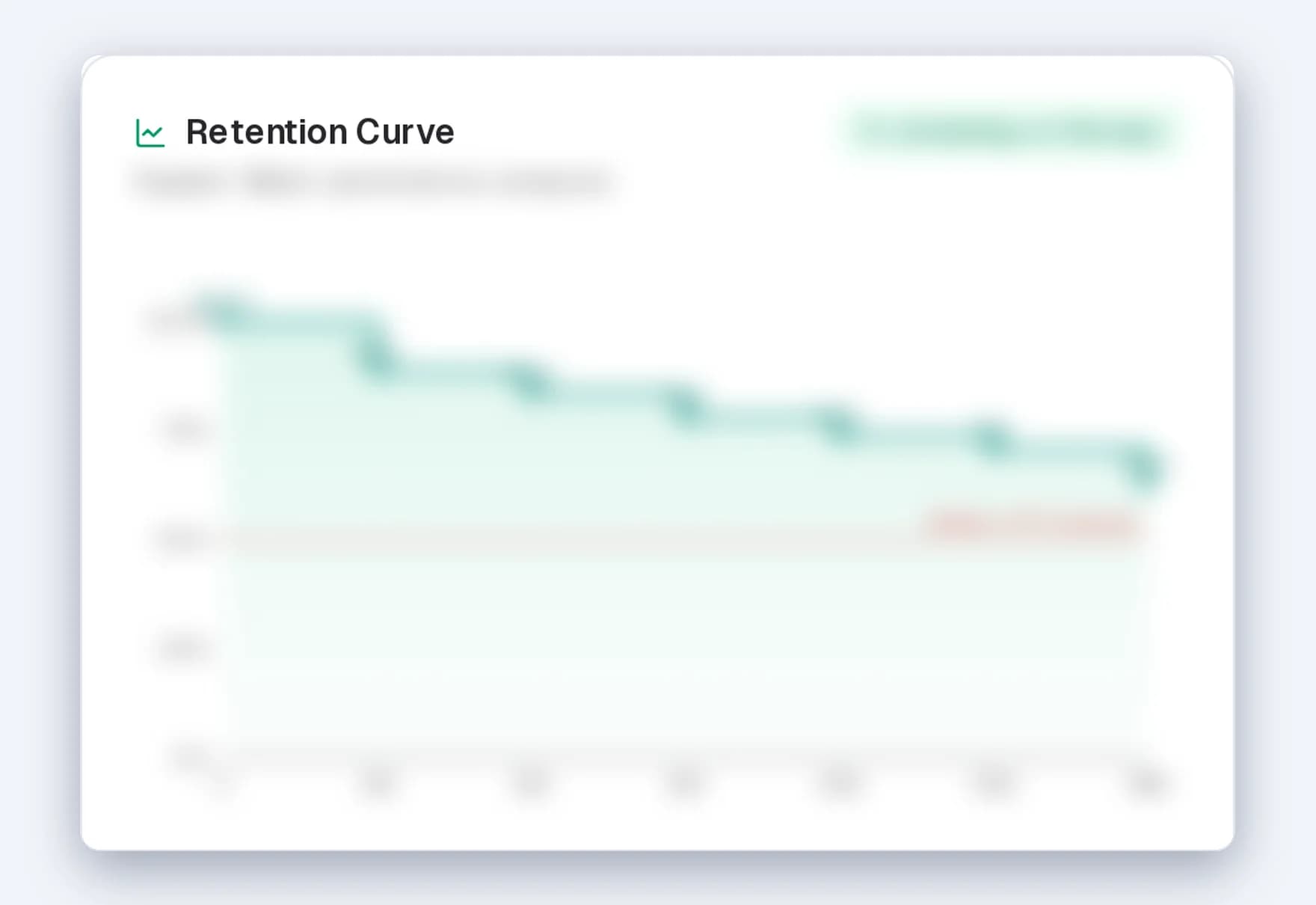
Illustrative dashboard Preserve programme continuity
Maintain authorised programme context, agreed KPIs, open follow-ups and next steps through provider transitions and structured handovers.
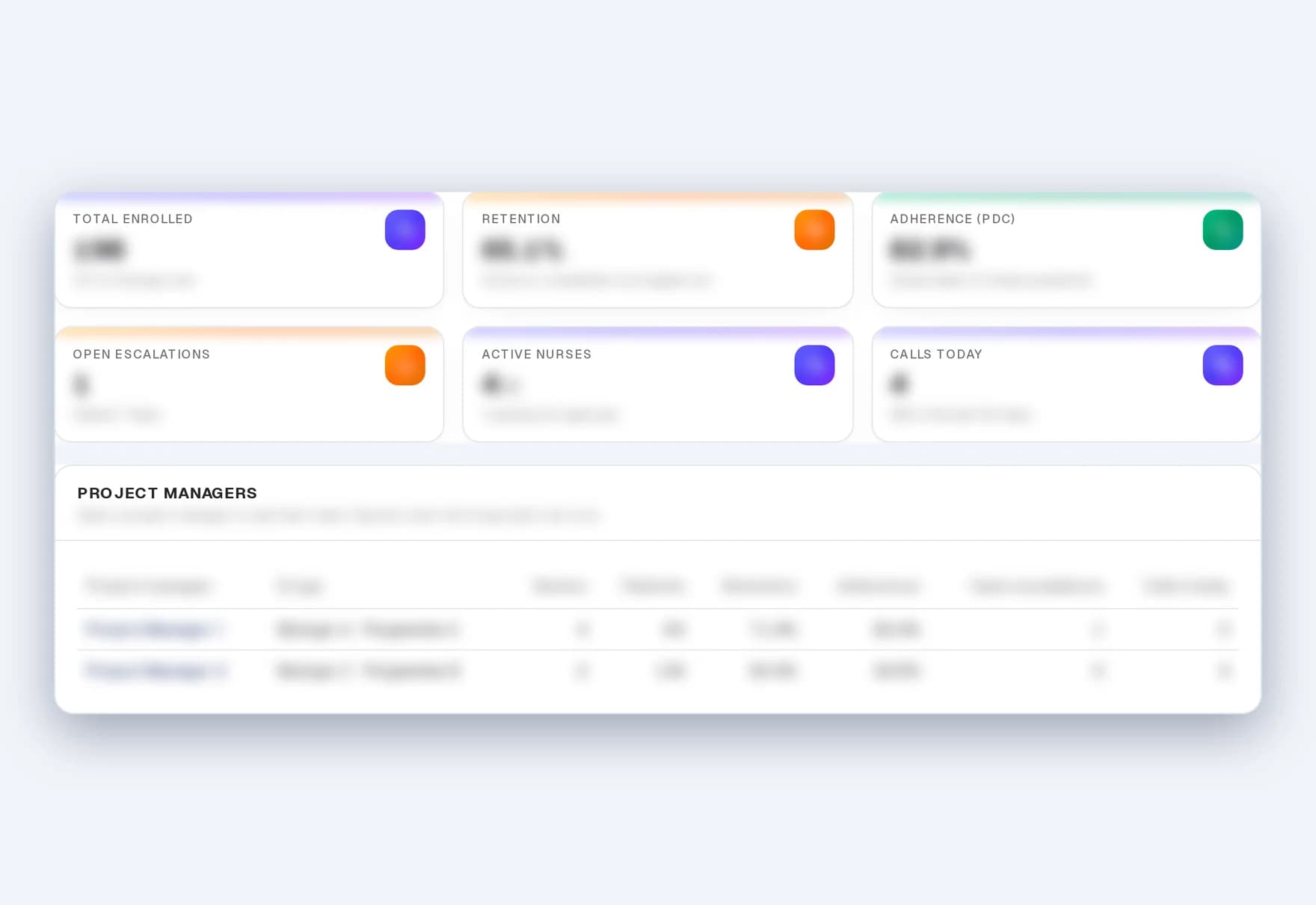
Illustrative dashboard
One programme. Different decisions. One governed intelligence layer.
Pharma / programme leadership
- Govern
- Prioritise
- Review performance
- Measure value
PACE Align
- See
- Identify risk
- Prioritise
- Verify
- Measure
- Preserve programme context
PSP vendor / care team
- Execute
- Engage
- Intervene
- Resolve
- Update status
Patient journey signals
- Enrolment
- Treatment rhythm
- Barriers
- Follow-up
- Continuity outcomes

The PSP operates the programme. PACE makes programme performance independently visible to pharma.
- Consistent KPI definitions across vendors
- Independent performance evidence
- Programme intelligence continuity through vendor change
For PSP partners: independence does not mean replacement or adversarial auditing. PSP teams continue to execute care; PACE helps them prioritise work, preserve handover context and demonstrate documented delivery more clearly to pharma.
Procure the service. Independently govern the outcome.
PACE provides an independent programme-intelligence layer above PSP execution so pharma can use consistent performance evidence, preserve programme context across supplier changes and make stronger service-review, renewal and tender decisions.
- Why a separate vendor?
- The PSP platform supports service delivery. PACE gives pharma an independent governance and intelligence view across operators.
- Performance evidence
- Use consistent KPI definitions for response, ageing, intervention completion, resolution and continuity.
- Vendor dependency
- Programme intelligence and agreed measures remain consistent when the operating vendor changes.
- Renewal / tender decisions
- Historical performance evidence supports more defensible sourcing decisions than narrative alone.
- Switching friction
- Preserve authorised history, open work, agreed definitions and reporting continuity through transition.
- Digital spend justification
- Connect contracted activity to measurable programme execution and documented outcomes.
The enterprise question
Built to fit programmes, not disrupt them.
- 1
Integrate, don’t duplicate
FHIR/EHR interoperability, PSP/CRM interfaces, APIs and structured CSV pathways.
- 2
Run under your model
Integrate PACE alongside existing systems or configure a partner-facing white-label experience.
- 3
Make actions traceable
Follow every risk from assignment and intervention to documented outcome, while keeping clinical decisions with professionals.
Ready for enterprise evaluation?
Start with one programme challenge. Define the next decision.
See the role-specific workflow, explore a measured business case, and understand the relevant integration and contracting path.
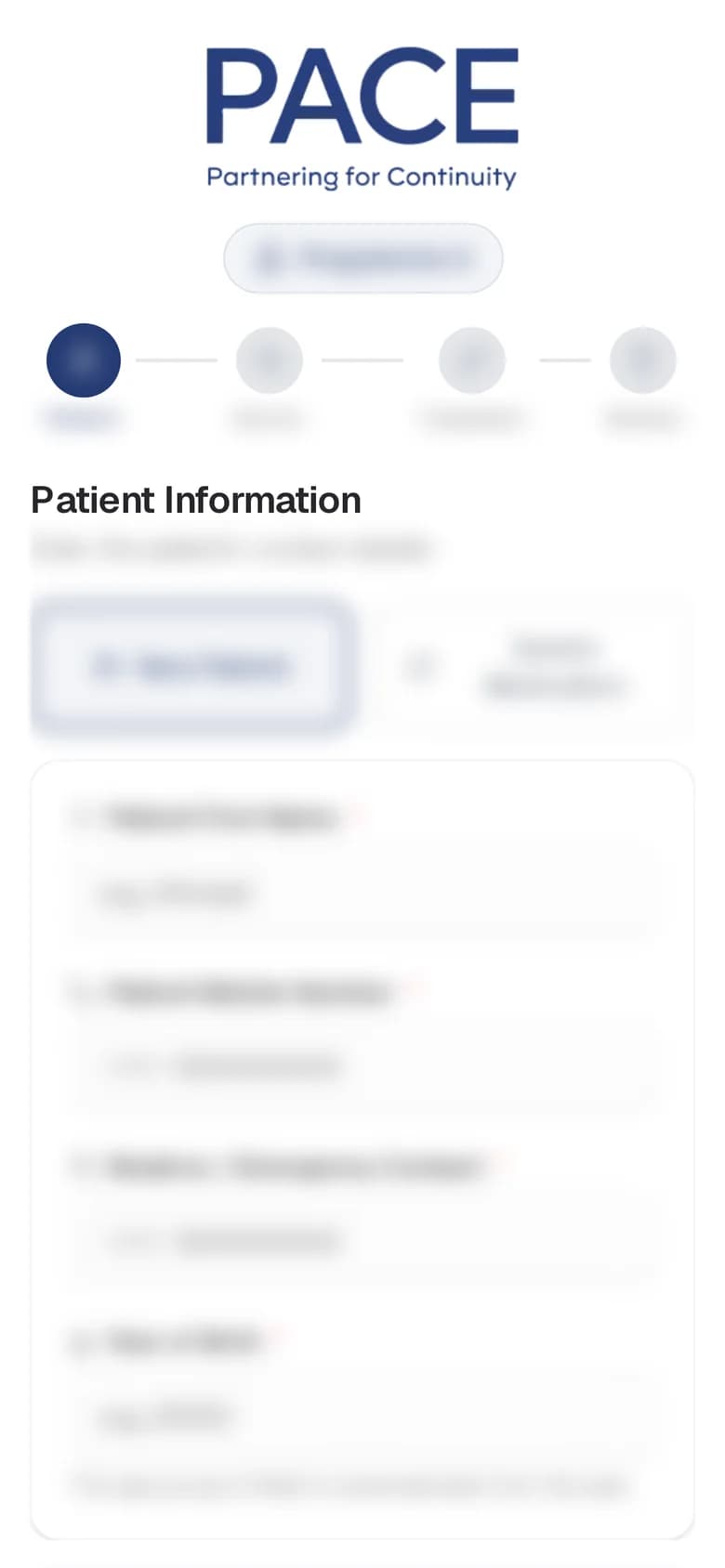
From enrolment to informed action.
- 1
Digital enrolment
Capture consent and the programme information needed to begin support.
- 2
Structured programme data
Bring enrolment, treatment status, dosing/treatment-rhythm signals and reported barriers into a consistent programme record.
- 3
Predictive insight
Identify dropout/persistence risk and give each team the programme intelligence relevant to its role.
- 4
Recorded follow-through
Track support activity, documented resolution and subsequent treatment status.

Illustrative dashboard

Built for Saudi healthcare transformation
PACE Align is Saudi-founded and designed to strengthen patient continuity through more connected, proactive and data-driven support across biologics and long-term specialty injectable therapies. Its role supports priorities consistent with Saudi Arabia’s Health Sector Transformation Program under Vision 2030, including digital health, quality and efficiency, prevention and earlier intervention, integrated care, and private-sector innovation.
- Digital health
- Quality & efficiency
- Earlier intervention & continuity
- Integrated care & private-sector innovation
Bring one programme challenge. See how PACE addresses it.
Explore the workflow and insights relevant to your team, and agree which outcomes a pilot should test.
Pilot proof-of-value measures
- Time from risk signal to action
- Overdue follow-ups
- Ageing unresolved cases
- Documented resolution
- Persistence / discontinuation
- Handover completeness